Brazilians will vote in a highly polarized presidential race on Sunday. Here’s what to know
Published October 3, 2026 · LATINO
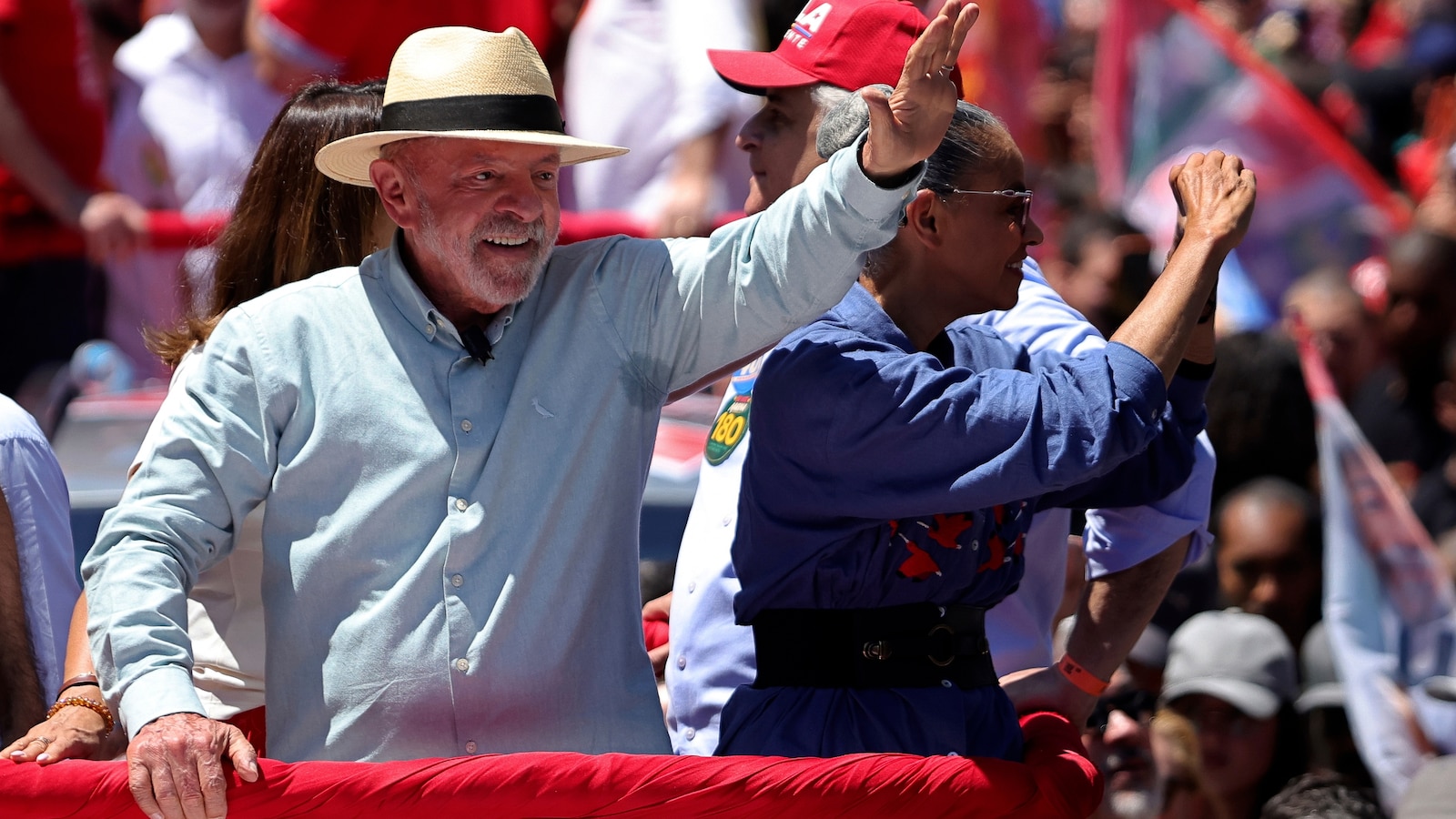
Millions of Brazilians are voting in an election featuring two main rivals: President Luiz Inácio Lula da Silva and Sen. Flávio Bolsonaro
Brazil is on the cusp of a critical presidential election that starkly contrasts two divergent political visions for the nation. Voters across the country are deciding between the seasoned incumbent Luiz Inácio Lula da Silva and newcomer Senator Flávio Bolsonaro, son of former President Jair Bolsonaro.
The ballot includes a dozen candidates, yet the race is predominantly a showdown between Lula, who is seeking a third nonconsecutive term at the age of 80, and Flávio Bolsonaro, 45, aiming to restore his family’s influence after his father’s controversial presidency from 2019 to 2022. Should no candidate secure an outright majority, a runoff is scheduled for October 25.
Related stories
Brazil’s electoral process, mandated for its nearly 160 million eligible voters, relies on electronic voting machines introduced in the 1990s to enhance transparency and prevent fraud. This system has facilitated swift vote counts, a stark improvement from earlier decades when paper ballots were vulnerable to manipulation. Despite allegations from Jair Bolsonaro questioning the integrity of this system, no substantial evidence of fraud has emerged.

Lula’s political journey is marked by resilience and complexity. Beginning as a union leader with a personal history shaped by labor hardships, including a factory accident, he has cultivated a loyal following. His tenure was previously interrupted by corruption charges that were annulled, allowing him to return to power. However, his current administration has faced criticism, with approval ratings dipping amid public concerns over crime and inflation.
Central to Lula’s platform is a commitment to harnessing Brazil’s natural resources for national benefit, coupled with environmental stewardship focused on protecting the Amazon rainforest. He also vows to maintain social welfare programs that have historically supported Brazil’s lower-income population.
In contrast, Flávio Bolsonaro represents a continuation of his father’s right-wing policies, emphasizing stringent security measures. His campaign highlights plans for large-scale prisons and adopting policies akin to those in El Salvador to combat organized crime. Bolsonaro’s approach also includes controversial stances on climate change and deforestation, aligning with denial of human impact and promising only to curb illegal logging.
The younger Bolsonaro’s campaign has not been without controversy. He is under investigation for alleged financial misconduct linked to a film project about his father’s life, casting shadows over his bid for the presidency.
Internationally, the election has attracted attention due to its implications for Brazil’s foreign relations, especially with the United States. Lula has been vocal in opposing external interference, particularly from Washington, which has recently imposed tariffs on Brazilian products and labeled Brazilian gangs as terrorist organizations. These actions, tied to the political tensions surrounding the Bolsonaro family, add a layer of geopolitical complexity to the vote.
Should Flávio Bolsonaro prevail, Brazil would join a wave of Latin American countries electing leaders aligned with former U.S. President Donald Trump’s ideological stance. Lula’s campaign counters this with strong rhetoric about safeguarding Brazilian sovereignty.
In the final days before the election, Lula’s team employed cultural messaging to underscore concerns about foreign influence, drawing parallels with historical examples of colonization.
As Brazil approaches this pivotal moment, the election’s outcome will not only shape domestic policies on crime, environment, and social welfare but also signal the country’s trajectory on the international stage. With starkly contrasting candidates embodying Brazil’s political divisions, the stakes remain exceptionally high.
Full story & global impact
This article was synthesized and rewritten by MusicTop Editorial from reporting published by abcnews.com. Read the publisher's report for the complete source context.
Read original source: abcnews.com