Bayreuth Festival opens with celebration and commemoration
Published July 29, 2026 · US
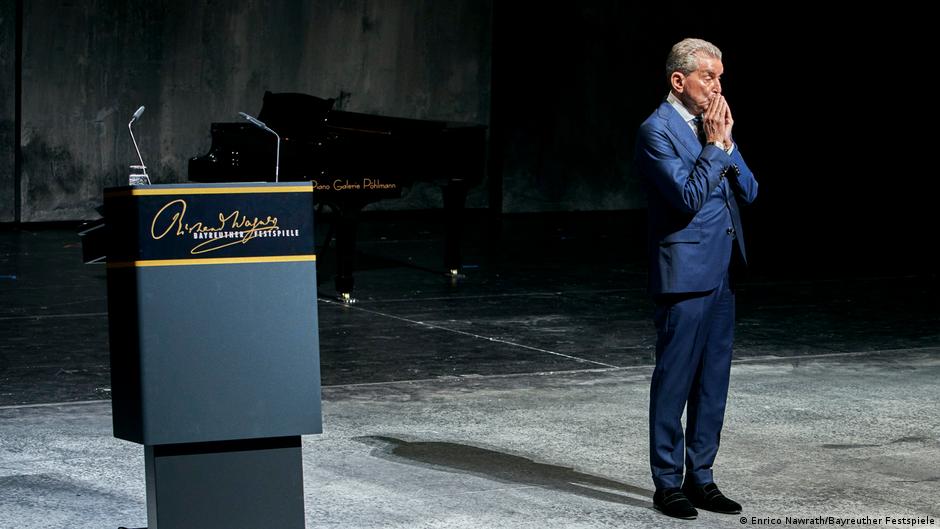
To mark its 150th anniversary, the Bayreuth Festival remembers victims of the Holocaust — and confronts its founder's antisemitism.
The 150th anniversary of the Bayreuth Festival, a landmark event in Germany’s cultural calendar, opened with a profound engagement with its complex legacy. This year’s festival, held in Bayreuth, Bavaria, balanced jubilation over its long-standing musical heritage with a solemn acknowledgment of the festival’s historical entanglements, particularly concerning antisemitism and the Holocaust.
Marking a significant shift in the festival’s approach to remembrance, the opening ceremonies featured a dedicated tribute to Jewish artists who contributed to Bayreuth’s legacy but were later persecuted or killed under the Nazi regime. A commemorative event, titled "Silenced Voices," served as a centerpiece of the two-day inauguration, emphasizing the festival's evolving commitment to confronting uncomfortable truths about its past.
Related stories

German-Jewish author Michel Friedman, whose family suffered devastating losses during the Holocaust, delivered a keynote speech that transcended historical reflection. He critiqued societal indifference toward rising intolerance and urged active opposition to contemporary antisemitism and nationalism. His address, noted for its depth and urgency, underscored the festival’s role not only in preserving artistic tradition but also in fostering civic responsibility.
In the festival grounds’ park, adjacent to a bust of Richard Wagner—the festival’s founder—a series of memorial steles stands as a tangible reminder of the Jewish artists silenced by history. This installation was accompanied by a prayer and a public reading of names from the Jewish community, integrating remembrance into the physical and cultural fabric of the festival.
The festival’s artistic director, Katharina Wagner, a descendant of Richard Wagner, openly acknowledged the family’s historical association with the Nazi regime. She framed the festival’s role as a counterpoint to rising extremist ideologies, emphasizing Bayreuth as a venue for rejecting antisemitism, racism, and nationalism. Her candid remarks signaled a deliberate break from previous eras of silence and evasion.
Prominent political figures, including German Chancellor Friedrich Merz and former Chancellor Angela Merkel, attended the opening events, underscoring the festival’s significance beyond the arts. Chancellor Merz reflected on Wagner’s dual legacy, recognizing both the composer’s artistic genius and the darker aspects of his ideological associations. He highlighted how Bayreuth remains a unique space for confronting Germany’s cultural and historical contradictions.
The festival auditorium itself featured a striking new mural by Hungarian street artist Adam Heat. This artwork encapsulates the festival’s 150-year narrative by juxtaposing iconic figures linked to Bayreuth’s history, including King Ludwig II of Bavaria, notable conductors, members of the Wagner family, and controversially, Adolf Hitler. The mural serves as a visual reminder of the complex intersections between art, politics, and history that have shaped Bayreuth.
Throughout the anniversary celebrations, there was an evident effort to integrate remembrance and celebration. The presence of Jewish community leaders alongside festival officials and international guests reflected a broader commitment to historical accountability. The festival’s program, which included the premiere of a new opera production, maintained artistic excellence while embedding historical consciousness.
This iteration of the Bayreuth Festival illustrates a renewed culture of remembrance that acknowledges past injustices and seeks to educate future audiences. By confronting its historical blind spots and embracing a more inclusive narrative, Bayreuth positions itself as not only a custodian of Wagner’s music but also a participant in ongoing social dialogue about memory, identity, and responsibility in Germany and beyond.
Details about the full scope of the festival’s programming and the broader public reception of these commemorative initiatives remain limited. However, the 150th anniversary clearly marks a pivotal moment in the festival’s evolution—one that integrates artistic tradition with a critical examination of its historical and political context.
Full story & global impact
This article was synthesized and rewritten by MusicTop Editorial from reporting published by dw.com. Read the publisher's report for the complete source context.
Read original source: dw.com