Campus Project 2026: Georgia Takes Center Stage
Published September 23, 2026 · US
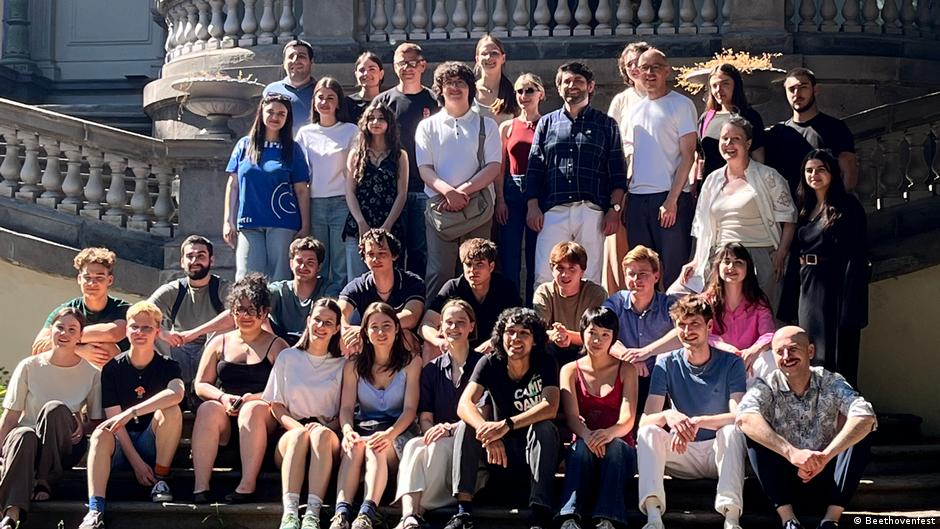
The Beethovenfest exchange project brings German and Georgian musical traditions together. And the reasons go beyond music.
In a vibrant cultural exchange spotlighting Georgia's unique musical heritage alongside Germany's classical traditions, the Beethovenfest Bonn's Campus Project 2026 has brought together young musicians from both nations. This collaboration represents more than an artistic endeavor; it serves as a cultural dialogue reflecting Georgia's evolving geopolitical landscape and its ties to Europe.
In June, approximately twenty young performers from Germany's Federal Youth Orchestra and Federal Youth Choir traveled to Tbilisi, Georgia’s capital, where they engaged with Georgian peers from the Tbilisi Youth Orchestra and the local independent music scene. The initiative aimed to create a unified musical program that synergizes the rich polyphonic legacy of Georgia with German classical repertoire, culminating in joint concerts scheduled for September 23 and 24 in Bonn and Berlin.
Related stories
 A Georgia couple won a $37 million jury verdict after their three-year-old son died during hospital treatment, but a judge cut it to $2 million; an October 28 appeals ruling now raises the judgment to $3 million
evilgiane & Slimesito Announce New Album EVILSLIME 2 Out Friday: Hear “Georgia State”
The project’s artistic leadership, under Georgian conductor Mirian Kokhunaishvili, emphasized the nuances in emotional expression within each country’s musical styles. While Georgian music is characterized by intense emotional fervor, German compositions reveal a different, yet equally profound, emotional depth. This synthesis was designed to transcend stylistic differences, highlighting music as a universal language.
A centerpiece of the repertoire is a novel arrangement by Georgian composer Mika Mdinaradze that weaves Beethoven’s choral work “Europa steht!” with traditional Georgian songs. Mdinaradze’s composition fosters a sonic dialogue that preserves the distinct identities of both traditions, symbolizing Georgia’s cultural and political aspiration to be recognized as part of the European community.
Since 2001, the Beethovenfest Campus Project has served as a platform for young musicians from countries undergoing significant historical transformations to explore and express their cultural narratives through music. Georgia's involvement, marking its second participation since 2003, reflects the festival’s commitment to engaging with nations where artistic expression intersects with societal change.
The German Federal Youth Orchestra's participation extends beyond the festival concerts. The ensemble undertook a tour in Georgia, performing in cities including Tbilisi and Kutaisi under Kokhunaishvili’s direction, with Georgian soloist Giorgi Gigashvili featured. These performances were met with enthusiastic reception, underscoring the resonance and relevance of such cross-cultural projects.
Among the youngest talents featured is Georgian pianist and composer Tsotne Zedginidze, who, at 17, has been commissioned to compose "Chmebi: Georgian Fantasia" for piano and chamber orchestra. Drawing on Georgia’s complex folk traditions and integrating innovative harmonies and energetic dance rhythms, Zedginidze’s work personalizes and contemporizes Georgian musical heritage. He will perform the premiere himself in both German venues.
The project also benefits from the support of renowned violinist Lisa Batiashvili, a Georgian-born artist who emigrated to Germany in her youth. Through her foundation, she fosters young Georgian musicians, including Zedginidze, emphasizing the growing cultural ties and mutual artistic enrichment between the two countries.
Beyond the music, the Campus Project articulates a broader message of solidarity amid Georgia’s ongoing political challenges and aspirations for European integration. By sharing Western human rights values and cultural expression, the collaboration underscores a vision of belonging and partnership within a larger European framework.
The upcoming concerts and related activities not only celebrate artistic excellence but also serve as a testament to the power of music as a medium for intercultural understanding and political expression. As the Beethovenfest Campus Project continues to evolve, it remains a vital forum for young artists from transformative regions to engage with history, identity, and hope through their shared craft.
Full story & global impact
This article was synthesized and rewritten by MusicTop Editorial from reporting published by dw.com. Read the publisher's report for the complete source context.
Read original source: dw.com