Dolly Parton’s secret weapon against Nashville: turning men into the punchline
Published September 7, 2026 · WORLD
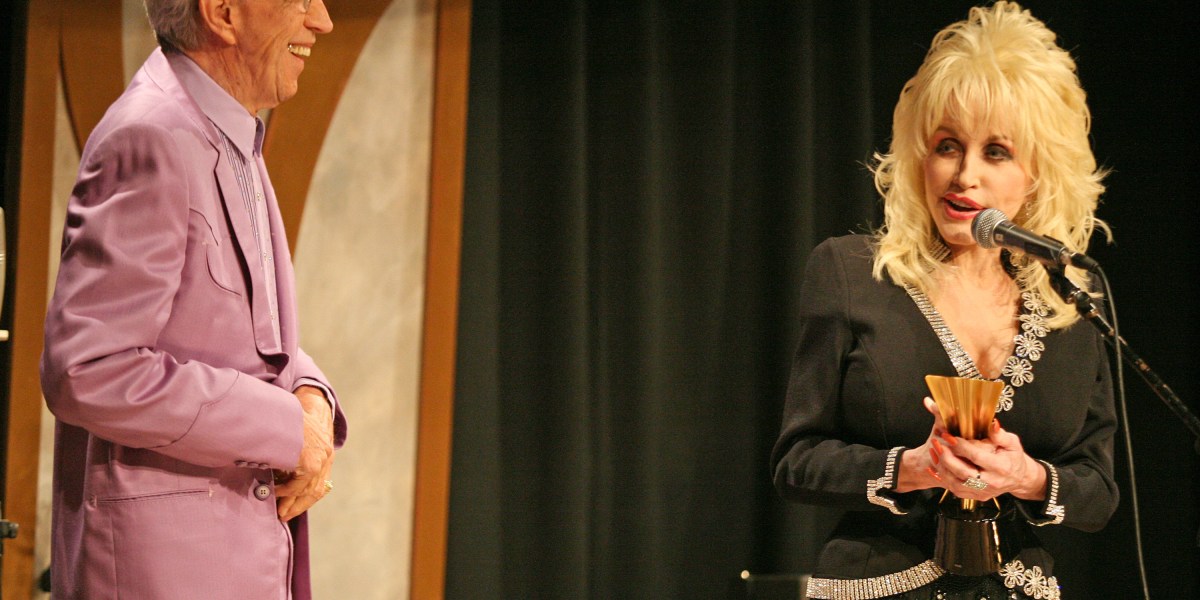
In songs like "Dumb Blonde" and a chaotic 1973 live duet with Porter Wagoner, Parton used self-deprecating wit to flip gendered expectations.
Dolly Parton’s emergence in country music during the late 1960s and early 1970s marked a significant shift in how female artists could navigate an industry long dominated by men. Initially gaining national prominence through her partnership with Porter Wagoner on his television show, Parton’s talent extended beyond her vocal abilities—her quick wit and strategic use of humor became crucial tools in asserting her creative independence.
A defining moment came during a 1973 live duet on The Porter Wagoner Show, where Parton’s spontaneous ad-libbing disrupted the scripted performance and underlined her command over the material. This episode hinted at the growing tension between the two artists, as Wagoner often exerted control over Parton’s musical direction despite her commercial success. The following year, Parton left Wagoner’s show, having already penned enduring hits like "Jolene" and "I Will Always Love You," songs that cemented her status as a formidable solo artist.
Related stories



Parton’s career trajectory reflects broader challenges faced by women in country music, who were frequently relegated to secondary roles or dismissed by industry gatekeepers. Female artists struggled for equitable recording opportunities and radio airplay, and when successful, they often faced accusations of abandoning traditional country roots for pop success. Within this context, humor became a vital mechanism for women to critique and subvert entrenched gender biases.
Historically, female country performers employed comedic personas to navigate societal expectations. For instance, artists like Lulu Belle in the 1930s and June Carter in the mid-20th century used humor to portray caricatures that allowed them to address taboo subjects and challenge male counterparts. Contemporary acts such as the Pistol Annies have continued this tradition, employing humor to explore themes like divorce and female empowerment.
Parton’s approach to humor stood out in its sharpness and self-awareness. Rather than simply eliciting laughter, her witty lyrics often flipped the narrative to make men the subjects of ridicule, thus exposing double standards. Early songs like "Dumb Blonde," penned by Curly Putman, and Parton’s own "Something Fishy" showcase this tactic. In these tracks, Parton’s narrators confront deceitful men with a blend of irony and confidence, dismantling stereotypes that portrayed women as naive or submissive.
Beyond songwriting, Parton’s public persona further disrupted expectations. Her campy, flamboyant appearance, often dismissed by critics, was a deliberate and financially demanding choice that underscored her control over her image. This helped her reclaim narratives around femininity and ambition, demonstrating that commercial success and country authenticity were not mutually exclusive qualities.
Parton’s legacy is thus not only one of musical achievement but also of cultural defiance. By employing humor as a strategic device, she challenged industry norms and created space for female agency in a male-centric genre. Her ability to blend self-deprecating jokes with pointed social commentary contributed to an enduring influence on country music and its evolving gender dynamics.
Her departure from Wagoner’s show and subsequent solo success illustrate how Parton harnessed her talents to transcend the limitations imposed on women in her field. Winning multiple Grammy awards and achieving numerous chart-topping hits over her career, she redefined what it meant to be a female country artist in both artistic and commercial terms.
Dolly Parton’s story is a testament to the power of humor and wit in confronting structural inequities. Her work continues to inspire artists who seek to balance authenticity with ambition and to challenge stereotypes through creativity. As country music progresses, Parton’s pioneering role remains a benchmark for understanding the interplay of gender, humor, and artistic agency within the genre.
Full story & global impact
This article was synthesized and rewritten by MusicTop Editorial from reporting published by fortune.com. Read the publisher's report for the complete source context.
Read original source: fortune.com